

A loyal wrecking ball with zero patience for bullshit.
Breed Snapshot
Other Names: Rottie, Rott, Rotten
Drool Level: Moderate. Tighter-lipped dogs may stay fairly tidy, while looser mouths can leave wet chins, water trails, and occasional strings.
Vocal Tendency: Moderate. They’re not typically nonstop barkers, but when they decide something matters, the whole house hears about it.
Some Rottweilers make a low, throaty social rumble during relaxed interaction, play, or contented contact. It can sound alarming to someone who doesn’t know the dog, but the sound alone does not tell you whether the dog is comfortable, conflicted, guarding, painful, or issuing a real warning.
Context matters: relaxed muscles, soft eyes, loose movement, and voluntary engagement are very different from freezing, stiffness, a hard stare, guarding, pain, or escalating intensity. Never dismiss every low vocalization as a harmless “Rottie rumble.”
Hear the Rottweiler Rumble
Audio adapted from 2006.11.14BrunoHappygrowl.flac by stereobanana on Freesound under the Creative Commons Sampling Plus 1.0 license. The recording was trimmed and filtered to reduce human background noise. Hear the original recording.
Colors/Pattern Variations: Black & Tan; Black & Mahogany; Black & Rust

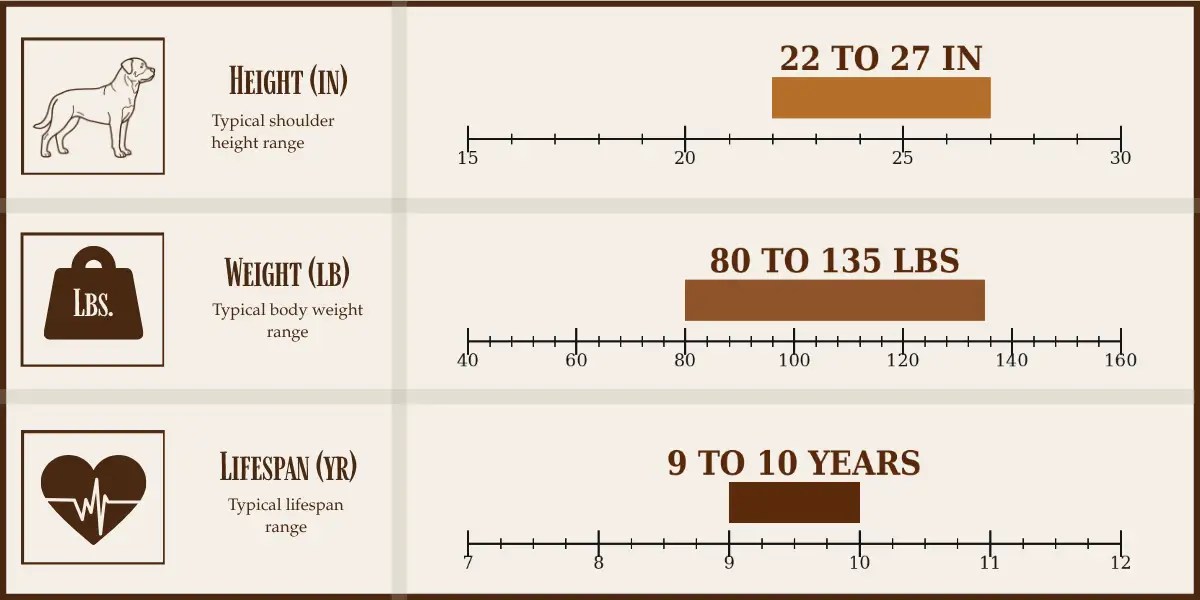
Average Lifespan: 9 to 10 years
General Build: Heavy-boned, deep-chested, broad, and muscular, with a compact body built for real strength rather than decorative bulk.
Male Size: 24-27 in; 95-135 lbs
Female Size: 22-25 in; 80-100 lbs
Historical Purpose & Working Traits
The Rottweiler was built around work that couldn’t be ignored until tomorrow.
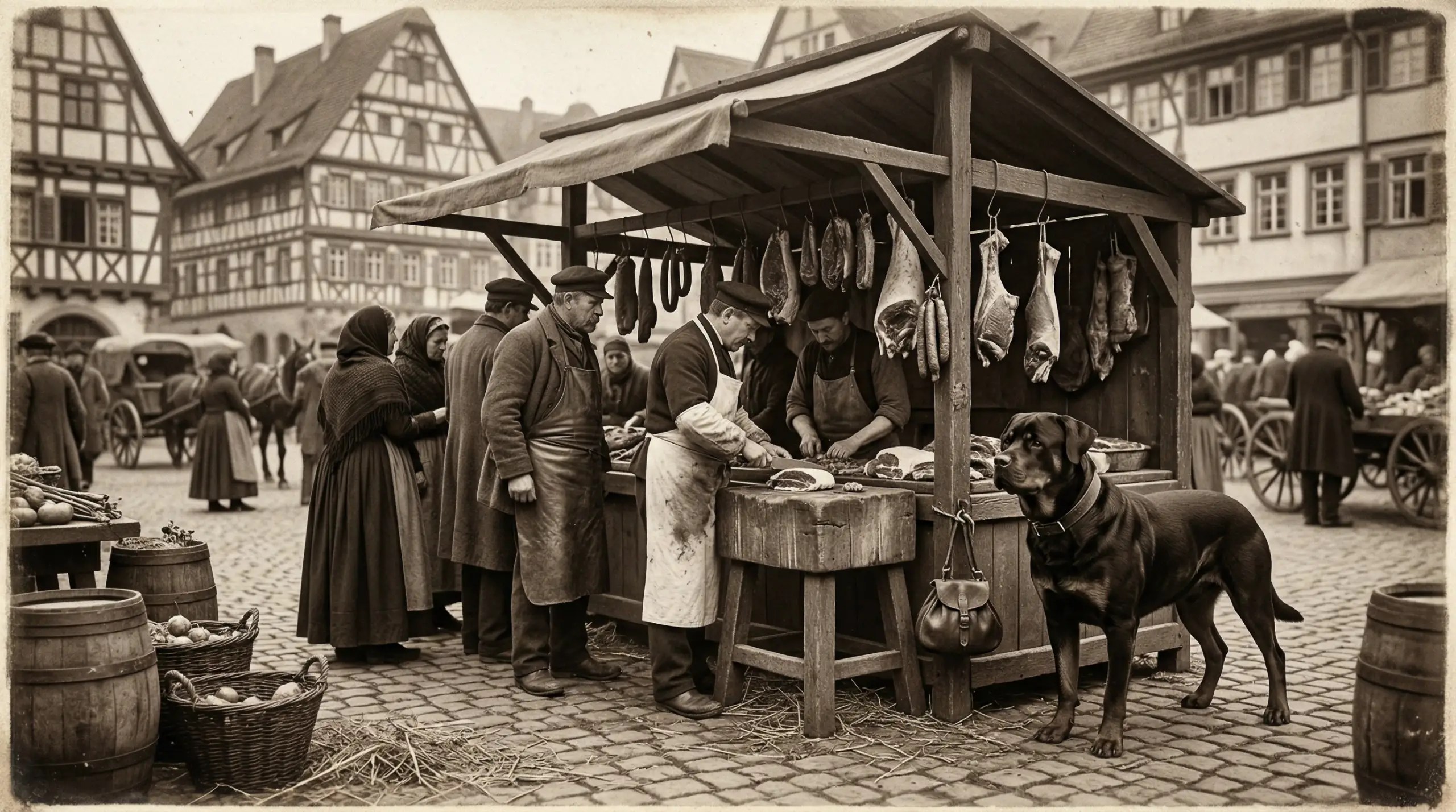
In and around Rottweil, Germany, these dogs helped drive cattle to market, kept livestock under control, guarded property and goods, and pulled loaded butcher carts. They worked close to people, animals, wagons, and crowded streets, so the job called for more than brute strength.
They had to move cattle without creating a stampede, stay steady when the market got loud, and step in when something genuinely needed stopping. A dog that panicked, picked fights, or reacted to every passing stranger wasn’t useful. Neither was one that folded the second a stubborn animal pushed back.
That work rewarded confidence, physical commitment, persistence, and judgment. The dog had to read pressure, hold its ground, adjust when the situation changed, and stay connected to the handler without waiting for every decision to be made for it.
The work eventually faded as rail transport replaced cattle drives, but the dog it produced was already firmly established: powerful, practical, watchful, close to its people, and expected to keep its head while doing serious work.
Core Personality, Social Nature & Maturity
Rottweilers tend to be deeply attached to their own people, but they’re not usually handing out friendship bracelets to every stranger who walks through the door.
With family, they’re often affectionate, steady, funny, and far more sensitive than the tough exterior suggests. Many want to stay close without constantly climbing into your lap, though some missed that memo entirely. They notice routines, moods, arguments, visitors, and anything else that changes the feel of the house.
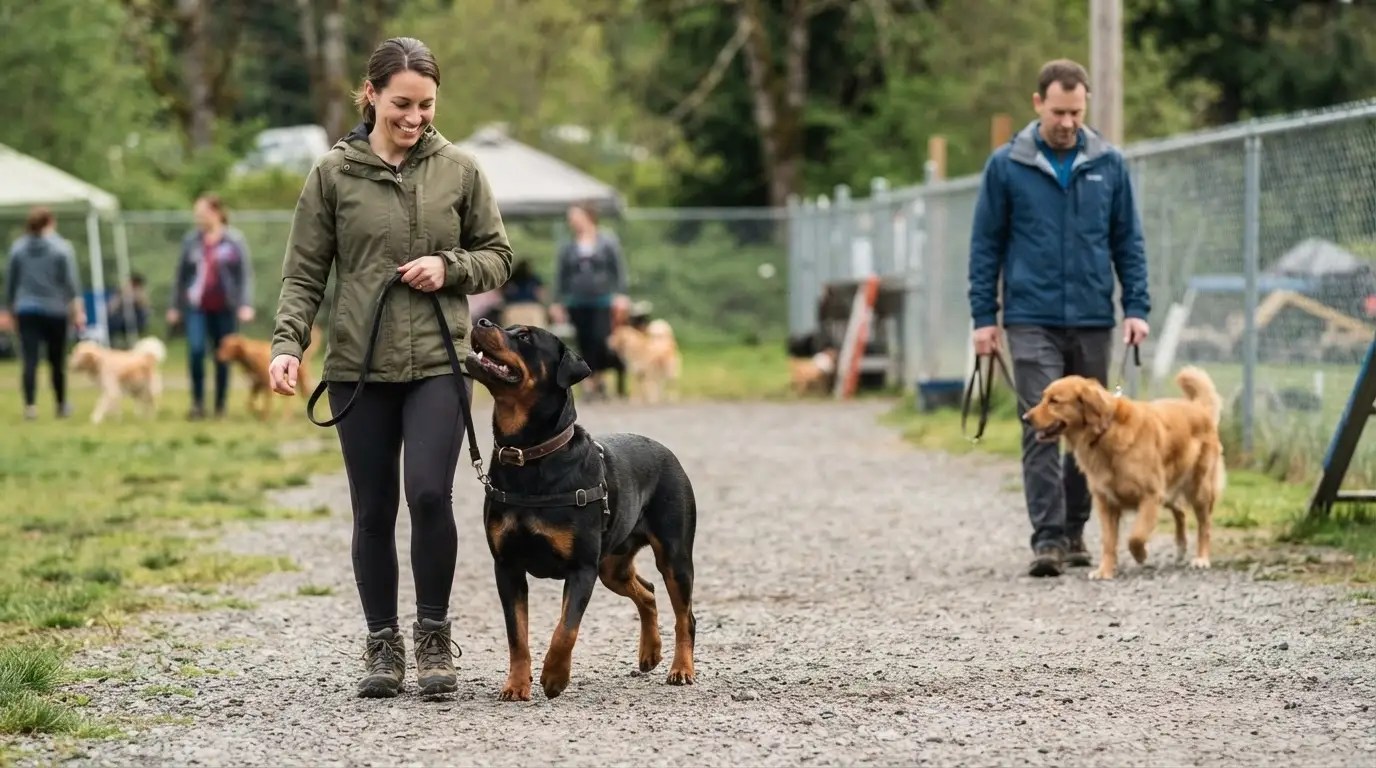
Strangers usually get assessed before they get accepted. A well-bred, well-socialized adult should be composed, not frantic or indiscriminately hostile, but reserve is normal. Some warm up quickly. Others remain polite and watchful. Forcing interaction usually creates more tension than trust.
As puppies, they can look deceptively easygoing. Adolescence is where the real dog starts showing up. Confidence increases, physical power arrives before judgment, and behaviors that seemed minor at six months can become far less charming at eighteen months. Guarding instincts, territorial awareness, dog selectivity, and pushback around weak boundaries may all become more noticeable as maturity settles in.
They mature slowly, often taking two to three years to develop reliable adult judgment. That doesn’t mean owners get to shrug at bad behavior until the brain finishes loading. It means the dog needs consistent guidance while confidence, impulse control, and social opinions are still taking shape.
A stable adult is usually calm, observant, and difficult to rattle. An unstable or poorly managed one can become suspicious, controlling, reactive, or far too willing to make decisions nobody asked for. The difference is rarely created by one training class. It comes from genetics, early social development, daily structure, and whether the humans stayed consistent after the puppy stopped being portable.
Modern Ownership Reality & Owner Fit
Living with them means sharing your home with a dog that notices everything and forgets very little.
They pay attention to who comes in, who belongs, what routines usually look like, and when somebody starts getting sloppy. That awareness can make them excellent companions and dependable household dogs, but it also means weak boundaries don’t stay harmless for long. A dog this strong, confident, and observant will fill in the blanks when the people around it keep leaving them open.
The fantasy owner wants the look, the loyalty, and the reputation. They picture a powerful dog beside them, calm with the family and intimidating when needed, without giving much thought to the years of training and judgment required to produce that adult. They want devotion without responsibility, protection without management, and obedience that somehow appears through affection and expensive equipment.
That owner usually starts making excuses early. The puppy is “just stubborn.” The adolescent is “testing limits.” The adult is “protective.” By then, the dog may be dragging people, controlling doorways, deciding who gets close, ignoring recalls, or treating every unfamiliar situation like a problem it has been promoted to solve.
The right owner doesn’t need to dominate the dog or turn daily life into a military exercise. They’re calm, consistent, observant, and willing to address small problems before eighty pounds of confidence turns them into large ones. They teach manners, maintain boundaries, supervise introductions, and keep working after the basic obedience class ends.
They also understand that affection and structure aren’t opposites. This dog can be deeply loving, playful, and closely bonded while still needing clear expectations every day. The best homes don’t spend their time proving who is in charge. They make good decisions often enough that the dog doesn’t feel invited to take over.

Children & Family Compatibility
Family life can work very well here, especially when the adults are actually involved instead of assuming “good with kids” is a safety plan.
Older children who understand boundaries are usually the easier match. Homes with toddlers or very young children need more caution because the size difference leaves little room for careless interactions, even when nobody means harm.
Visiting children can be harder than the kids who live in the home. Running, screaming, roughhousing, and sudden crowding may create tension, especially when the dog doesn’t know the child well.
This isn’t a breed that should be left to “figure it out” with kids. Adults need to supervise, protect resting space, and separate everyone when the household gets too loud or chaotic.
The best match is a family that treats supervision as normal, not as proof something has already gone wrong. In that kind of home, living with children can work very well.
Dog Compatibility & Conflict Risk
Living with other dogs can work, but “dog-friendly” is too broad to be useful here.
Many are comfortable with familiar dogs, especially when the relationship starts early and the household stays stable. Maturity can change that picture. The adolescent that played with everyone may grow into an adult with much firmer opinions, and same-sex pairings carry the most concern.
Opposite-sex matches are often easier, but they aren’t guaranteed. Size, confidence, resource tension, poor introductions, and two dogs that both refuse to yield can turn a manageable disagreement into a serious fight.
Dog parks, crowded daycare groups, and loose, chaotic greetings leave very little room for error. One bad interaction between powerful adults can cause far more than a noisy scuffle and an awkward apology.
The better fit is a home that values a few stable relationships over constant social access. Some will enjoy another dog. Others will be safer and happier as the only one. The owner has to accept the dog in front of them instead of forcing a social life because the fantasy looked friendlier.
Cat Compatibility & Prey Risk
Living with cats can work, but the safest setups usually start with a calm introduction and a cat that isn’t inclined to bolt through the house like it owes someone money.
Familiar cats are often easier than unfamiliar ones. A household cat may be accepted as part of the home while outdoor cats still trigger interest or pursuit.
Chasing is the main concern. Fast movement can turn curiosity into pursuit quickly, and the size difference makes mistakes expensive. A playful paw, body block, or badly judged grab can injure a cat even without serious intent.
The cat needs reliable escape routes, elevated spaces, and areas the dog can’t enter. Food, litter boxes, resting spots, and narrow hallways shouldn’t become places where the cat has to negotiate past a much larger animal.
This can be a workable match when the dog stays calm, disengages, and doesn’t pressure the cat. It becomes a bad one when fixation, stalking, or repeated chasing keeps showing up and the owner keeps calling it play.
Small Animal Compatibility & Prey Risk
Small pets are a much harder match than cats.
Rabbits, guinea pigs, poultry, birds, rodents, and other fragile animals can trigger chasing, grabbing, or intense fixation. Even friendly curiosity is dangerous when one animal is powerful enough to injure the other in a second.
Growing up around a small pet doesn’t erase prey drive or guarantee lifelong safety. Familiarity may reduce interest, but it doesn’t make unsupervised access sensible.
Secure housing and physical separation are essential. Cages, pens, and baby gates are management tools, not invitations to test whether everyone has suddenly developed excellent judgment.
This is usually a poor fit for homes that expect free interaction between the dog and small animals. Coexistence may be possible with strict separation, but direct access carries too much risk to dress up as optimism.
Coat Type, Shedding & Climate Tolerance
The short outer coat hides a dense undercoat that does more work than the tidy appearance suggests.
Shedding happens year-round and gets heavier when the seasons change. The loose hair is short, stiff, and remarkably committed to fabric, upholstery, and every corner you thought was clean. It’s not the dramatic fur storm of a long-coated breed, but it’s constant enough to matter.
That undercoat provides solid protection in cool weather, and most adults handle cold better than heat. Warm, humid conditions are harder, especially during exercise. Dark coloring absorbs heat quickly, and a heavy body doesn’t shed warmth efficiently.
Hot-weather activity needs to be shortened, moved to cooler parts of the day, and stopped before the dog looks exhausted. Cold rain and winter weather are usually less troublesome, though no coat makes prolonged exposure, frozen ground, or poor shelter harmless.
Shaving isn’t useful and can interfere with the coat’s natural insulation. The goal is to remove loose hair and keep the skin healthy, not strip away the system that already knows what it’s doing.
Grooming Needs & Maintenance
The routine is simple, but simple doesn’t mean optional.
Brush once or twice a week through most of the year, then increase the frequency when the undercoat starts releasing in earnest. A rubber curry brush or short-coat grooming tool usually handles the job without turning maintenance into an archaeological dig.
Bathing every few months is usually enough unless dirt, odor, or an unfortunate encounter with something dead changes the schedule. Dry the coat thoroughly, especially in cool weather, and check the skin for irritation, lumps, hot spots, or anything else hiding under the black hair.
Nails need regular trimming because weight doesn’t magically wear them down evenly. Long nails change footing and place extra strain on the joints, which is a particularly stupid problem to create in a heavy dog.
Ears should be checked and cleaned when needed, teeth require routine care, and the lips and chin may need wiping after meals or drinks. None of this is technically difficult. The difficult part is convincing humans that basic maintenance still counts when the coat looks respectable from across the room.
Training Approach, Priorities & Common Mistakes
Training works best when the rules are clear, the rewards matter, and the person holding the leash follows through the same way every time.
This isn’t a dog that needs harsh handling. It needs confident handling. Pressure, intimidation, and constant correction can create resistance or conflict, especially once the adolescent realizes just how much dog is attached to those opinions. Calm structure gets farther than theatrics.
Start with the skills that keep a powerful adult manageable: leash manners, recall, impulse control, polite greetings, doorway manners, place work, release cues, and giving up food or objects without a debate. Handling tolerance matters just as much. Feet, ears, mouth, collar, body checks, restraint, and veterinary procedures should all become normal before strength turns every appointment into a group project.
Short, focused sessions usually work better than drilling the same exercise until everyone hates it. Keep expectations consistent across the household. One person allowing jumping, gate rushing, furniture guarding, or selective obedience can undo a great deal of careful work.
The most common mistake is waiting for a problem to become impressive before addressing it. A puppy dragging toward visitors, ignoring boundaries, guarding space, or refusing to disengage isn’t showing “confidence.” It’s rehearsing behavior that becomes much harder to manage in an adult body.
Another failure point is assuming intelligence equals cooperation. Learning the cue is often easy. Choosing to follow it when distracted, excited, suspicious, or convinced the human has made a poor decision takes repetition and trust.
Training should continue well past puppy class. The goal isn’t a dog that performs tricks in the kitchen. It’s an adult that can stay under control when the environment gets loud, crowded, inconvenient, or genuinely difficult.
Physical Exercise Needs
This is a strong, athletic dog, but not an endurance machine that needs to run until its legs file a complaint.
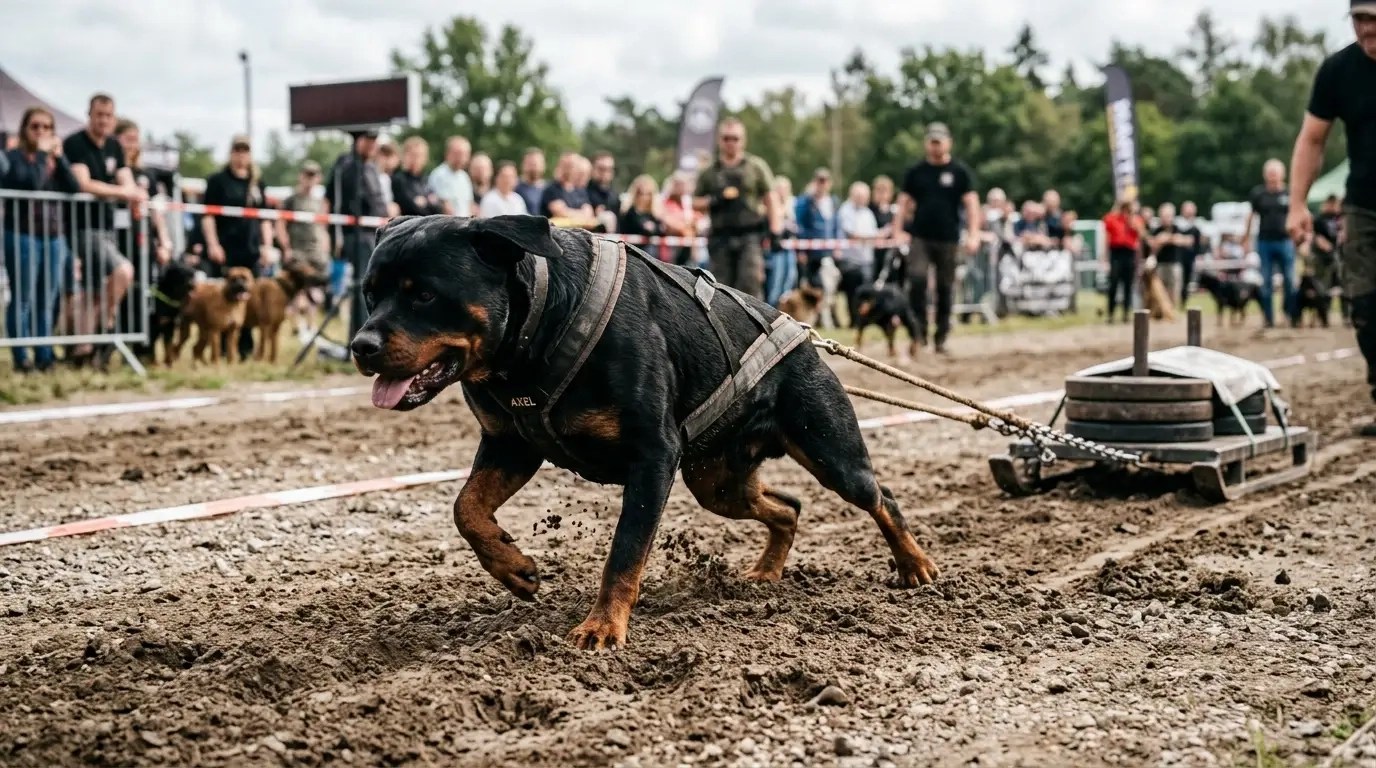
Healthy adults usually do well with steady, purposeful exercise: brisk walks, hiking, swimming, controlled play, tracking, and structured activities that ask for both movement and self-control. The goal is regular work, not random exhaustion.
Puppies and adolescents need enough activity to stay sane without pounding growing joints into the ground. Repetitive jumping, forced running, and hard impact should wait until the body is mature. Adults can handle more, but weight, orthopedic health, heat, and conditioning still matter.
A slow stroll around the block won’t be enough for most, yet endless fetch and chaotic wrestling can create a fitter dog with worse brakes. Good exercise should take the edge off without teaching the dog that every waking moment requires maximum speed.
Most adults need a solid daily outlet, with easier and harder days depending on age, health, and weather. Skip it too often and the excess energy usually leaks into pacing, rough behavior, pushiness, or household demolition disguised as curiosity.
Mental Exercise & Job Needs
Physical exercise tires the body. It doesn’t automatically satisfy a dog bred to pay attention, make decisions, and work beside a handler.
Useful mental work includes obedience, scent games, tracking, carrying tasks, controlled searches, place work, problem-solving toys, and practical routines with a clear beginning and end. The job doesn’t need to be complicated. It needs to feel like something more meaningful than waiting for dinner.
Short sessions woven into daily life usually work better than one elaborate weekend activity followed by six days of decorative ownership. Ask for patience at doors, focused leash work, object searches, calm stationing, or a few minutes of precise training before access to something the dog wants.
Too little mental work can produce a dog that starts inventing responsibilities: monitoring windows, controlling movement, patrolling the yard, pestering people, or deciding every sound requires an investigation. That isn’t proof the dog needs more freedom. It’s proof the brain found an opening and started freelancing.
The goal isn’t constant entertainment. It’s regular, purposeful engagement that teaches the dog when to work, when to stop, and when nothing happening is the correct answer.
Containment & Boundary Management
Containment needs to be sturdy, boring, and reliable. This isn’t the place for decorative fencing, loose latches, or the optimistic belief that the dog “usually stays in the yard.”
A secure physical fence is the best setup. Gates should close cleanly, latch properly, and stay that way after children, visitors, delivery drivers, and every other human weak link passes through. Invisible fencing is a poor substitute for a real barrier. It may discourage crossing, but it doesn’t keep other dogs or people out, and a determined dog can still blow through it.
Doorways, garages, vehicles, and open gates deserve the same attention as the yard. One careless moment can put a powerful dog in traffic, on a neighbor’s property, or face-to-face with another animal before anyone has time to fix the mistake.
Tethering shouldn’t be the primary containment plan. It creates frustration, limits escape options, and leaves the dog exposed to people and animals entering its space. Crates, secure indoor areas, and properly maintained fencing are far safer when supervision is limited.
The goal isn’t maximum security for a criminal mastermind. It’s a setup that doesn’t depend on perfect behavior every second of the day. Good containment removes opportunities for bad decisions instead of waiting to find out how much the fence can forgive.
Health Watch
A Rottweiler can look solid enough to survive a building collapse, but that sturdy appearance shouldn’t be mistaken for low health risk.
Good breeding matters, but it can only reduce risk, not erase it. Health testing, responsible weight management, appropriate exercise, routine veterinary care, and paying attention to changes in movement, appetite, stamina, or behavior all matter throughout life.
Persistent limping, unusual fatigue, collapse, sudden abdominal swelling, breathing changes, or unexplained behavior shifts shouldn’t be brushed off as “just getting older.” Early action won’t change every outcome, but waiting usually gives the problem more time and the owner fewer options.
- Osteosarcoma
- Canine Hip Dysplasia
- Canine Elbow Dysplasia
- Gastric Dilatation-Volvulus (GDV)
- Subaortic Stenosis (SAS)
- Cranial Cruciate Ligament Disease (CCLD)
- Entropion
- Acute Moist Dermatitis
- Histiocytic Sarcoma
- Inflammatory Bowel Disease (IBD)
Verify and Learn More About the Rottweiler
- American Rottweiler Club – Official breed club info, history, and breeder education.
- Rottweiler AKC Breed Profile – General overview, temperament notes, and basic care guidance.
- VCA Hospitals – Rottweiler Breed Profile – Vet-reviewed breed overview covering health tendencies, care needs, and day-to-day management from a clinical, owner-friendly perspective.
Zero Woofs Reality Check
This is where you stop judging the dog and start judging yourself. You can love the look, the loyalty, and the power all you want, but if you can’t handle the work, the boundaries, and the consequences, this isn’t your dog.
Take the Zero Woofs Given Dog Breed Compatibility Quiz to find a dog that actually fits your lifestyle (instead of your ego).
If you want the brutal truth about Rottweilers before you make a questionable life choice, grab Rottweiler Insights from the ZWG shop.